Top 5 Reasons to Choose a Metal Foundry for Specialized Projects
Wiki Article
Recognizing Metal Casting Procedures: Advancements and Patterns in the Foundry Industry
The foundry market is experiencing significant improvements driven by technological developments. Innovations such as 3D printing and expert system are improving metal casting processes, boosting efficiency and precision. Sustainable techniques are obtaining traction, emphasizing the value of ecological duty. In enhancement, the introduction of innovative materials and automation is improving overall casting high quality. These developments suggest a critical change in the market, increasing concerns regarding future directions and implications for suppliers.Developments in 3D Printing for Metal Casting
Recent innovations in 3D printing modern technology have actually significantly changed the landscape of steel casting. The combination of additive manufacturing techniques has actually enabled the quick manufacturing of complicated patterns and molds that were previously tough or difficult to attain with conventional approaches. By making use of products such as sand and metal powders, producers can create detailed geometries that enhance design flexibility and lower product waste. This development not just speeds up the prototyping procedure however additionally permits the modification of components tailored to particular applications.
3D printing helps with much shorter lead times, which is vital in markets requiring quick turnaround for components. The technology additionally sustains the manufacturing of lightweight structures, thus improving power performance in output. Consequently, the foundry sector is seeing a change towards more lasting techniques, driven by the efficiency and precision offered by these modern 3D printing methods in metal casting procedures.
The Role of Expert System in Precision Production
As sectors progressively embrace innovative production modern technologies, fabricated intelligence (AI) is playing a crucial function in enhancing precision manufacturing procedures. AI formulas assess huge datasets to optimize and recognize patterns manufacturing specifications, resulting in boosted accuracy and performance. In metal casting, AI help in anticipating upkeep, reducing downtime by projecting devices failings prior to they take place.AI-driven simulations allow suppliers to model the casting process, refining designs and reducing issues. Artificial intelligence techniques improve top quality control by discovering abnormalities in real-time, thus making sure that only products satisfying rigid specifications continue via the assembly line.
Lasting Practices in the Foundry Market
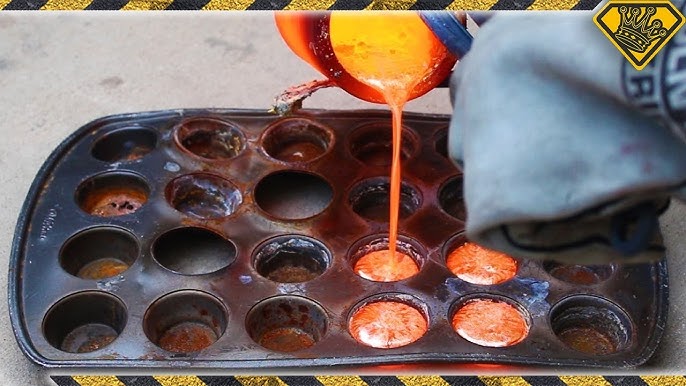
Sustainability has become a critical emphasis in the foundry industry, triggering suppliers to embrace methods that minimize environmental impact while maintaining productivity - Aluminum Foundry. One noticeable method consists of the recycling of products, specifically metals, which significantly reduces waste and power usage. Shops are increasingly implementing closed-loop systems, enabling the reuse of sand and other casting products, thus minimizing the demand for virgin resourcesOn top of that, energy-efficient modern technologies, such as electric heating systems, are getting grip, as they reduced greenhouse gas exhausts compared to traditional approaches. Many factories are checking out the use of environmentally friendly layers and biodegradable binders to decrease hazardous results. Worker training on lasting practices has likewise come to be crucial, promoting a society of environmental obligation within organizations. Overall, these lasting methods not only add to environmental preservation but also improve the lasting stability of the foundry industry in a progressively eco-conscious market.
Developments in Products for Boosted Casting Quality
With the constant advancement of the foundry market, innovations in materials have come to be crucial for improving casting high quality. Advanced alloys and composite products are increasingly being used to improve mechanical properties and reduce flaws in castings. These materials commonly use premium strength-to-weight ratios and boosted resistance to rust and wear, resolving the demands of contemporary applications.Furthermore, the consolidation of nanomaterials is acquiring grip, enabling finer microstructures that bring about improved surface coatings and dimensional precision. Metal Casting. 3D printing modern technologies likewise contribute in generating complex geometries with marginal waste, making it possible for making use of specific products that were previously challenging to cast
The growth of eco pleasant binders and additives adds to lasting practices while maintaining high-quality results. Jointly, these technologies not just boost the efficiency of cast products however also straighten with the sector's change in the direction of sustainability and efficiency.
Automation and Robotics in Metal Casting Processes
Automation and robotics are reinventing metal casting procedures by enhancing procedures and boosting precision. In modern factories, robotic systems are utilized for tasks such as mold and mildew handling, pouring, and completing, significantly lowering human treatment. This not only minimizes the danger of accidents but also guarantees regular top quality in manufacturing.Automation modern technologies, such as computer mathematical control (CNC) makers, facilitate elaborate layouts and complicated geometries that were previously challenging to accomplish. In addition, real-time information analytics enable manufacturers to optimize and keep track of procedures performance continually.
The combination of automation causes increased efficiency and performance, enabling foundries to meet expanding market needs while lowering lead times. As the sector embraces these innovations, the workforce is likewise evolving, needing brand-new abilities to run and keep advanced equipment. Overall, the adoption of automation and robotics is a critical fad forming the future of metal casting procedures.
Frequently Asked Questions
What Is the History of Metal Casting Strategies?
Metal casting methods go back to old civilizations, with evidence of bronze casting in Mesopotamia around 3000 BCE. Over centuries, methods advanced significantly, integrating developments in products and modern technology, shaping modern-day commercial techniques.Just How Does Metal Casting Effect the Environment?
Metal casting significantly influences the atmosphere through energy intake, discharges, and waste generation. Improvements in lasting practices and technologies aim to alleviate these impacts, advertising even more environmentally pleasant techniques within the industry.What Precaution Are Essential in Factories?
What Prevail Defects in Metal Casting Products?
Usual problems in steel casting products consist of porosity, shrinking, misruns, cold shuts, and surface area flaws. These issues emerge from aspects such as incorrect temperature level control, poor mold layout, and contamination throughout the casting procedure.Just How Do Foundries Make Sure Quality Assurance in Casting Processes?
Shops carry out extensive quality assurance actions through routine inspections, standardized screening, procedure surveillance, and adherence to market criteria. These methods help recognize flaws early, ensuring the honesty and dependability of the final casting products.Technologies such as 3D printing and man-made intelligence are improving steel casting processes, enhancing effectiveness and precision. Current developments in 3D printing innovation have significantly transformed the landscape of metal casting. Automation and robotics are revolutionizing steel casting processes by enhancing and improving operations precision. Metal casting techniques date back to ancient people, Metal Casting with evidence of bronze casting in Mesopotamia around 3000 BCE. Usual issues in steel casting items include porosity, shrinkage, misruns, cold shuts, and surface blemishes.
Report this wiki page